me when I procrastinate translating Latin to study motors vs me when I procrastinate mod 8 physics to translate Latin
dicet aliquis: "haec est igitur tua disciplina? sic tu instituis adulescentis? ob hanc causam tibi hunc puerum parens commendavit et tradidit, ut in amore atque in voluptatibus adulescentiam suam conlocaret, et ut hanc tu vitam atque haec studia defenderes?"
- ob takes acc
- ob hanc causam result clause flag, like ideo. i.e. hanc causam is the cause and the ut ... sjt is the result
- adulescentis - adulescens, adulescentis — adj: young, growing — substantive: a young man/woman — apparently an i stem even though it's not parisyllabic
- adulescentiam adulescentia, adulescentiae F youth, youthfulness, young manhood
- studia studium, studi(i) - haec would be NT PL
Someone will say: "So, your method is this? Do you educate the youth like this? On account of this cause, the parent entrusted and gave this boy to you, so that he would establish his own youth in love and in enjoyments, and so that you would defend this life and these pursuits?"
ego, si quis, iudices, hoc robore animi atque hac indole virtutis atque continentiae fuit, ut respueret omnes voluptates omnemque vitae suae cursum in labore corporis atque in animi contentione conficeret, quem non quies, non remissio, non aequalium studia, non ludi, non convivium delectaret, nihil in vita expetendum [esse] putaret, nisi quod esset cum laude et cum dignitate coniunctum, hunc mea sententia divinis quibusdam bonis instructum atque ornatum puto.
- ego subject of verb puto at the very end
- si quis = si aliquis
- introduces another hypothetical person
- ni quod esset cum laude et cum dignitate coniunctum
- quod: connecting relative - A connecting relative is a relative which relates back to a noun or concept in the previous sentence or passage.
- sententia, sententiae F opinion, feeling, way of thinking
- divinus -a -um - divine, of a diety, sacred
- instructum, ornatum masculine (hunc is masculine) accusative
- hunc ... instructum atque ornatum indirect statement introduced by puto
I, Jurors, if anyone is with this strength of character and this this inborn quality of virtue and of self-control, then he was rejecting all enjoyments and construct all the course of his own life in labour of the body and in exertion of the mind; whom, not quiet, nor relaxation, nor pursuits of his peers, nor games, nor a feast would please; he would believe that nothing in life is to be sought, except the thing that was connected with praise and dignity; I would believe in my opinion that this person was instructed and cultivated with certain divine benefits.
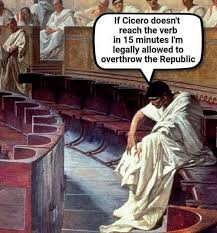
this is a very "if Cicero doesn't reach the verb in 15 minutes I'm legally allowed to overthrow the Republic" sentence
ex hoc genere illos fuisse arbitror Camillos, Fabricios, Curios omnesque eos, qui haec ex minimis tanta fecerunt.
- Camillos, Fabricios, Curios rhetorical plurals. see also commentary extract
- haec = these things of the republic
- tanta describes haec
I imagine that from this group were those Camilli, Fabricii, Curii and all those, who made these things of such size from so little.
From Keitel & Crawford commentary:
M Furius Camillus was twice dictator and repelled an invasion of Gauls in 38 BC
C. Fabricius Luscinus, censor 275 BC, fought against the Greek Pyrrhus
M Curius Dentatus, consul 290, also fought against the Greek PyrrhusAll three were instrumental in securing Rome's freedom from foreign enemies and in consolidating and expanding Rome's power in Italy.
Such historical precedents (exempla) were a staple of Roman oratory.
Cicero brings up these famous, exemplary Romans to underline the impossible virtue of the ideal young man. He implies that there are not such Romans these days. Cicero will develop this point in the next few chapters.
Cicero's Unlogical Tricks!!!!!!!!!
overall trying to do things:
- reframing the case as a love affair, not a crime
- redirecting the juror's attention away from the actual facts/details of the case
and these manifest in a number of ways in each