86 to 108 ← 109 to 125 → 126 to 146
btw yeah shorts can become heavy but poets don't like doing that??
sententia (lit. feeling, opinion) - a pithy short summary statement that Juvenal likes to do, sums up/conveys main idea of stuff he's said in the previous few lines.
amicus - juvvy consistently uses amicus to mean patron
109 Praeterea sanctum nihil +aut+ ab inguine tutum,
- praeterea, nihil sanctum cui est, aut tutum est ab inguine cuius
- sanctum - religious terminology (think kinda like sacrosanct)
- +aut+ suggests that the author noticed a corruption of the text (it doesn't scan, ab is short & juvvy has no reason to force it into a heavy)
110 non matrona laris, non filia virgo, nec ipse
- non ma|trona la|ris non| filia | virgo, nec |ipse
- matrona - this is the wife of the patron mentioned before. Like if you let the Greek in (be a patron to him)
- lar = tiny household gods, by metonomy
111 sponsus levis adhuc, non filius ante pudicus.
- adhuc, ante - LIKE SAID BEFORE try take adverbs with the words they're closest to, so in this case adhuc → levis, and ante → pudicus.
112 horum si nihil est, aviam resupinat amici.
113 [scire volunt secreta domus atque inde timeri.]
- volunt - referring to the Greeks
- timeri - the Greek wants to be feared, because (as mentioned no one likes you anymore
- brackets indicate that the editor think it should be omitted. why?
- suddenly plurally referring to the Greek (volunt)
- anticlimatic, before the family rizzing was escalating
- go read commentaries
- theory that it's a gloss (aka the scribe putting notes explaining what's going on, i.e. "he wants to rizz up the whole family because he wants to be feared"). then when it got copied, bc the note was somehow in meter, they copied it into the text.
114 et quoniam coepit Graecorum mentio, transi
- transi basic (present active 2nd person) SG imp of transeo because it's irregular (trans + eo)
115 gymnasia atque audi facinus maioris abollae.
- gymnasia stereotypically greek
- facinus maioris abollae - nobody knows what the saying means
116 Stoicus occidit Baream delator amicum
- Stoicus - adjective, not a name, capitalised because Stoic Philosophy
- in 66AD (end of reign of Nero) stoic philosopher/teacher P (publius) Egnatius Celer was called into court as a witness. He testified against Barea, who was presumably executed.
- Juvvy doesn't dignify Egnatius with a name but he does name Barea
117 discipulumque senex ripa nutritus in illa
- discipu|lumque se|nex ri|pa nu|tritus in | illa
118 ad quam Gorgonei delapsa est pinna caballi.
- Gorgoneus a um - adjective
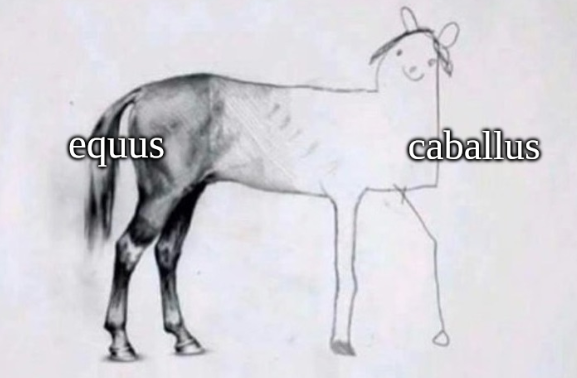
- caballus - an informal, common way of saying equus
- caballus ↔ equus is like "piss" ↔ "go to bathroom"
- supposedly a feather from the Pegasus fell and landed at Tarsus (ταρσoς = pinna)
- sipa nutritus ... pinna caballi roundabout way of saying the guy's from Tarsus, mock epic, then irreverent with sudden drop to caballi
119 non est Romano cuiquam locus hic, ubi regnat
- cuiquam dative posession?
- hic long by scansion
- ubi wow a relative adverb?
120 Protogenes aliquis vel Diphilus aut Hermarchus,
- again juvvy not giving just 1 example, but 3
121 qui gentis vitio numquam partitur amicum,
- vito abl.cause
122 solus habet. nam cum facilem stillavit in aurem
123 exiguum de naturae patriaeque veneno,
124 limine summoveor, perierunt tempora longi
- perierunt tempora longi servitii - as in the time Umbricius has spent in servitude to his patron has perished, all that time counts for nothing bc the Greek.
125 servitii; nusquam minor est iactura clientis.
- nusquam minor est iactura clientis - sententia
- minor → less importance
Moreover, nothing is sacred or safe from his groin,
not the matron of the household, not the virgin daughter, not the
fiance himself, to this point still light, not the previously chaste son.
If there is nothing of these, he lays down the friend's grandmother.
They want to know about the secrets of the house and from then on to be feared.
And seeing that the mention of the Greeks begins, pass over
the gymnasiums and listen to the wicked-deed of a larger cloak.
The Stoic informant (who) killed Barea, his patron
and student, (was) old, nurtured on that riverbank
towards which the feather of the Gorgonian nag descended.
There is no place for any Roman here, where
some Protogenes or Diphilus or Hermarchus reigns,
he never shares his friend due to the vice of his nation,
he alone has him. For when he dropped into an easy ear
a small amount from the poison of his nature and fatherland,
I am removed from the threshold, the times of long servitude perishes,
nowhere is the dismissal of a client of less importance.